
Perfecting the Frame: Your Complete Guide to Otoplasty in Noida with Dr. Sahil Singla
Have you ever felt like your ears “speak” louder than your face? For many people, ears that stick out or appear misshapen aren’t just a physical trait—they are a source of constant self-consciousness. Whether it’s a child facing teasing at school or an adult who avoids certain hairstyles to keep their ears covered, the emotional weight can be heavy.
Think of your ears as the frame of a beautiful painting. If the frame is slightly crooked or too large, it distracts from the masterpiece itself. Otoplasty in Noida is essentially the art of adjusting that frame so that everyone focuses on the beautiful “painting”—your face.
The good news is that you don’t have to live with ears that make you feel uncomfortable. With the professional expertise of Dr. Sahil Singla, ear reshaping surgery has become a safe, common, and life-changing procedure for hundreds of patients. Let’s dive into everything you need to know about this transformative journey.
 1. What is Otoplasty? Defining Ear Reshaping
Otoplasty, commonly known as ear pinning or ear reshaping, is a cosmetic procedure that changes the shape, position, or size of the ears. Unlike many other cosmetic surgeries that focus on reversing the signs of aging, otoplasty is often about correcting structural issues that have been present since birth.
The goal isn’t to create “perfect” ears, as perfect symmetry doesn’t exist in nature. Instead, the goal is to create balance and proportion. When you opt for Otoplasty in Noida, you are choosing a procedure that brings your ears into harmony with the rest of your facial features, allowing your eyes and smile to take center stage.
2. Why Dr. Sahil Singla is the Right Choice for You
When it comes to your face, precision is everything. Dr. Sahil Singla is widely recognized plastic surgeon in Noida for his meticulous approach to plastic and reconstructive surgery. He understands that the cartilage in the ear is delicate and requires a gentle, expert touch.
Dr. Singla doesn’t just look at the ears in isolation; he considers your entire profile. His philosophy is rooted in natural-looking results. He avoids the “over-pinned” look that can appear artificial. By choosing a surgeon with his level of dedication, you are ensuring that your surgical journey is backed by years of specialized training and a genuine care for patient well-being.
3. Who is a Good Candidate for Otoplasty?
Are you wondering if this procedure is right for you or your child? Generally, otoplasty is suitable for anyone who is bothered by the appearance of their ears.
Ideal candidates typically include:
-
Healthy Individuals: Those without life-threatening illnesses or untreated chronic ear infections.
-
Non-Smokers: Or those willing to quit for the duration of the healing process.
-
Realistic Expecters: Individuals who understand that surgery improves appearance but won’t achieve “flawless” perfection.
-
Children (Age 5+): By age five, a child’s ear cartilage is stable enough for surgery, and corrected ears can prevent years of schoolyard bullying.
4. Common Ear Issues Addressed by Surgery
Otoplasty isn’t just for ears that stick out. It can address a variety of concerns:
-
Protruding Ears: Ears that sit too far from the head (often due to an underdeveloped antihelical fold).
-
Large Ears (Macrotia): When the ears are disproportionately large compared to the head.
-
Lop Ear: When the top of the ear folds downward and forward.
-
Shell Ear: A condition where certain curves and folds of the outer ear are missing.
-
Asymmetry: When one ear sits significantly higher or differently than the other.
5. The Psychology of Ear Surgery: More Than Just Aesthetics
It’s easy to dismiss ear surgery as “just a vanity thing,” but for many, it’s a deep-seated emotional need. Our ears are a prominent part of our identity. When someone feels their ears are a “defect,” they often develop coping mechanisms—like never tying their hair back or wearing hats constantly.
Correcting these issues through Otoplasty in Noida often leads to a massive surge in self-esteem. It’s like a weight being lifted off your shoulders. Suddenly, you aren’t worried about how you look from the side or if people are staring. This mental freedom is perhaps the greatest benefit of the procedure.
6. Otoplasty for Children: When is the Best Time?
Parents often ask, “Is my child too young?” The ears are one of the first body parts to reach full size. By age five or six, the cartilage is firm enough to hold stitches but soft enough to be easily reshaped.
Having the surgery before a child enters primary school can prevent the psychological trauma associated with teasing. Dr. Sahil Singla is highly experienced in pediatric cases, ensuring a friendly, comfortable environment where the child feels safe and the parents feel informed.
7. What to Expect During Your Initial Consultation
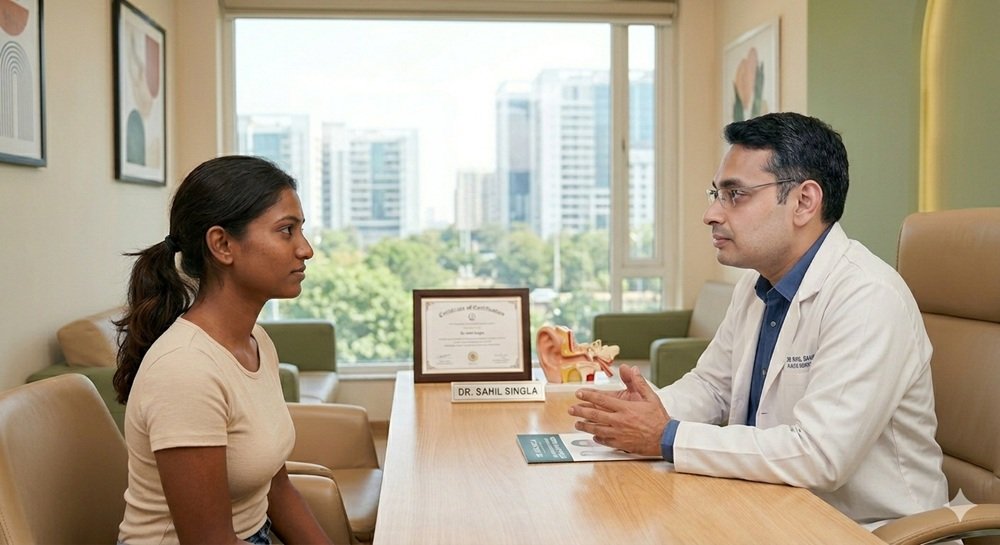
Your first meeting with Dr. Sahil Singla is a discovery phase. He will evaluate the structure of your ears and take measurements. This is a “no-pressure” environment where you can express exactly what you don’t like about your ears.
Dr. Singla will explain the technique he plans to use and show you “before and after” photos of similar cases. This helps align your expectations with what is surgically possible. He will also review your medical history to ensure you are a safe candidate for anesthesia.
8. Preparing for Your Ear Reshaping Procedure
Preparation makes for a stress-free surgery day. If you are an adult, you’ll be advised to avoid certain anti-inflammatory drugs like aspirin, which can increase bleeding.
For children, preparation is more about emotional support. Explaining the process in simple terms—that the doctor is going to “tuck” their ears so they look better—can help ease anxiety. You should also arrange for a comfortable recovery space at home with plenty of pillows to keep the head elevated.
9. Understanding the Surgical Technique
The procedure usually takes about one to two hours. Depending on the patient’s age and comfort level, it can be done under local anesthesia with sedation or general anesthesia.
Dr. Sahil Singla typically makes a small incision behind the ear, in the natural fold where the ear joins the head. Through this opening, he can reshape the cartilage, remove excess tissue, or use permanent internal stitches to pin the ear closer to the head. Because the incision is in the back, the resulting scar is virtually hidden from view.
10. The Road to Recovery: What to Expect Post-Op
Recovery from Otoplasty in Noida is generally straightforward. Immediately after surgery, your ears will be covered in a bulky bandage. This acts like a protective “helmet” to keep the new shape secure.
Recovery Milestones:
-
Days 1-3: Some mild throbbing or aching is normal. Over-the-counter pain relief usually does the trick.
-
Week 1: The heavy bandages are removed and replaced with a lighter headband (like a sports band).
-
Weeks 2-4: You’ll need to wear the headband at night to prevent the ears from bending forward during sleep.
-
Month 1: Most swelling disappears, and you can return to all normal activities, including sports.
11. Will There Be Scars? Understanding Incision Placement
One of the biggest fears of any surgery is the scar. With otoplasty, you can breathe a sigh of relief. Since Dr. Sahil Singla places the incisions in the crease behind the ear, they are not visible to people talking to you from the front or side. Over time, these marks fade into thin, pale lines that are very difficult to see even if you are looking for them.
12. Long-Term Results and Expectations
The results of otoplasty are visible as soon as the initial bandages are removed. Once the cartilage has healed into its new position, the results are permanent. Unlike fillers or Botox, you don’t need “top-ups.”
As the swelling subsides over the following weeks, the ears will look increasingly natural. You’ll notice that your face looks more balanced, and you might find yourself trying out new hairstyles you never dared to wear before!
13. Combining Otoplasty with Other Facial Enhancements
While otoplasty is a powerful stand-alone procedure, some adults choose to combine it with other treatments. For example, if you are already seeking facial rejuvenation, you might discuss a Facelift or Rhinoplasty (nose job) with Dr. Singla. Combining procedures can sometimes reduce overall recovery time and help achieve a total facial “glow-up.”
14. Safety, Risks, and Aftercare Protocols
While otoplasty is very safe, it is still surgery. Potential risks include minor asymmetry, temporary numbness, or infection. However, following Dr. Sahil Singla’s aftercare instructions significantly reduces these risks.
Important Aftercare Tips:
-
Don’t touch: Avoid picking at the stitches.
-
Sleep elevated: Use two pillows to keep swelling down.
-
Keep it dry: Follow instructions on when you can safely wash your hair.
-
Wear the headband: This is the most crucial step to ensure the ears stay in their new position.
Conclusion: Embracing Your New Profile
Your ears shouldn’t be the thing people notice first when they meet you. By choosing Otoplasty in Noida, you are taking a brave step toward self-confidence and physical harmony. With the skilled hands of Dr. Sahil Singla, you can rest assured that your results will be beautiful, natural, and life-changing.
It’s time to stop hiding. Whether it’s for you or your child, a simple ear reshaping procedure can open up a world of confidence.
Frequently Asked Questions (FAQs)
1. Is the surgery painful for children?
Most children handle the recovery very well. While there is some discomfort in the first 48 hours, it is easily managed with pediatric pain medication and usually resolves quickly.
2. How long after the surgery can I wash my hair?
Typically, you can wash your hair 3 to 5 days after the surgery, once the initial heavy bandages are removed, but you must be very gentle around the ear area.
3. Will my ears “pop back” to their old position?
If you follow the aftercare instructions and wear your headband as directed, the cartilage will heal in its new position permanently. The internal stitches are designed to hold the shape until the body takes over.
4. Can otoplasty improve my hearing?
No. Otoplasty is a cosmetic procedure that affects the outer ear (the pinna). It does not change the internal structures of the ear or affect how you hear.
5. When can I return to wearing earrings?
If you had a simple pinning, you can usually wear earrings once the swelling is gone. If the earlobe itself was reshaped, Dr. Singla will advise you on the best time to re-pierce or wear jewelry.
Contact Us
Ready to frame your face perfectly? Contact Dr. Sahil Singla’s clinic today to book your consultation for Otoplasty in Noida.
-
Surgeon: Dr. Sahil Singla (Plastic & Cosmetic Surgeon)
-
Location: A 230, Sector 122, Noida, Uttar Pradesh
-
Expertise: Ear Reshaping, Facial Reconstruction, and Aesthetic Surgery
-
Book Your Appointment: +91 9873748259