
Nerve Grafting in Noida – Advanced Nerve Reconstruction by Dr Sahil Singla
Nerve injuries can have a significant impact on your daily life. Something as simple as holding a pen, buttoning a shirt, smiling, or feeling the touch of a loved one can become difficult when nerves are damaged. If you have suffered a traumatic injury, accident, surgery-related nerve damage, or a long-standing nerve condition, timely treatment can make a remarkable difference.
When it comes to Nerve Grafting in Noida, Dr. Sahil Singla, an experienced plastic and reconstructive surgeon, offers advanced surgical solutions designed to restore nerve function, improve sensation, and enhance quality of life. With modern surgical techniques and personalized treatment planning, nerve grafting can help patients regain movement and sensation that may otherwise be permanently lost.
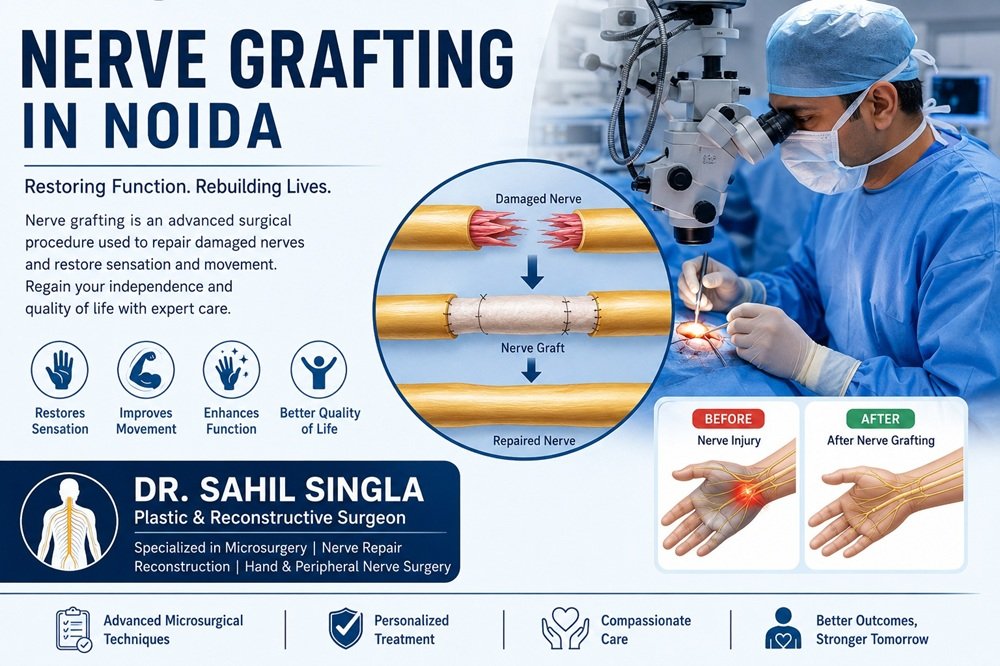
Think of your nerves as electrical wires carrying messages between your brain and body. When these wires are damaged, communication is interrupted. Nerve grafting acts like a bridge that reconnects the broken pathway, allowing signals to travel again and restoring function over time.
Whether the injury is recent or several months old, understanding your treatment options is the first step toward recovery.
 1. What is Nerve Grafting?
Nerve grafting is a specialized surgical procedure used to repair damaged nerves when direct nerve repair is not possible. During the procedure, a healthy nerve segment is taken from another part of the body and used to bridge the gap between the injured nerve ends.
The goal is to create a pathway through which nerve fibers can grow and reconnect with muscles, skin, or other tissues. Over time, this helps restore sensation, movement, or both.
Nerve grafting is commonly performed by reconstructive surgeons who have expertise in microsurgery and nerve reconstruction.
2. Understanding Nerve Injuries
Nerves play a crucial role in controlling movement and sensation. When a nerve is damaged, signals from the brain may not reach the intended muscles or sensory areas.
Nerve injuries can range from mild stretching injuries to complete nerve severance. In severe cases, the nerve cannot heal on its own and requires surgical intervention.
The severity of injury often determines the treatment approach. Early evaluation is essential because delayed treatment can affect the final outcome.
3. Why is Nerve Grafting Needed?
Sometimes the gap between two ends of an injured nerve is too large to reconnect directly without tension. Attempting a direct repair in such cases may lead to poor healing.
Nerve grafting becomes necessary when:
- There is a significant nerve gap.
- The nerve has been severely damaged.
- Scar tissue prevents direct repair.
- Previous repair attempts have failed.
- Traumatic injuries have destroyed a nerve segment.
By bridging the gap, nerve grafting provides the best opportunity for nerve regeneration and functional recovery.
4. Who Can Benefit from Nerve Grafting?
Many patients can benefit from Nerve Grafting in Noida, particularly those suffering from traumatic or complex nerve injuries.
Ideal Candidates Include:
- Accident victims
- Patients with deep cuts involving nerves
- Individuals with nerve damage after surgery
- Patients with facial nerve injuries
- People with hand and arm nerve injuries
- Patients with brachial plexus injuries
- Individuals experiencing loss of sensation or muscle function
A detailed assessment helps determine whether nerve grafting is the most suitable treatment option.
5. Common Causes of Nerve Damage
Nerve injuries can occur in various situations. Understanding the cause helps surgeons plan effective treatment.
Road Traffic Accidents
High-impact trauma can stretch, crush, or sever nerves.
Industrial Injuries
Machinery accidents often result in severe nerve damage.
Sports Injuries
Contact sports and falls can lead to nerve compression or tearing.
Sharp Object Injuries
Knife cuts, glass injuries, and penetrating wounds may sever nerves completely.
Surgical Complications
In rare cases, nerves may be injured during surgical procedures.
Tumor Removal
Removing tumors close to nerves can occasionally result in nerve damage.
6. Symptoms That Indicate Nerve Injury
Recognizing the symptoms early can improve treatment outcomes.
Common Symptoms Include:
- Numbness
- Tingling sensations
- Loss of sensation
- Muscle weakness
- Paralysis
- Difficulty gripping objects
- Burning pain
- Reduced coordination
- Facial asymmetry
If these symptoms appear after an injury, prompt medical evaluation is recommended.
7. Types of Nerve Grafting Procedures
Different grafting techniques may be used depending on the location and extent of nerve damage.
Autologous Nerve Grafting
This is the most common method. A healthy nerve is taken from another part of the patient’s body and used for reconstruction.
Cable Grafting
Multiple nerve grafts are placed side by side to repair larger nerve defects.
Processed Nerve Allografts
In selected cases, specially processed donor nerve tissue may be used.
Vascularized Nerve Grafts
These grafts include their own blood supply and are used for complex reconstructions.
The choice of technique depends on individual patient needs and surgical findings.
8. How Dr Sahil Singla Performs Nerve Grafting
Successful nerve reconstruction requires exceptional precision. Dr. Sahil Singla utilizes advanced microsurgical techniques to repair damaged nerves.
Comprehensive Evaluation
The process begins with a detailed clinical examination and imaging studies.
Surgical Planning
A personalized treatment plan is developed based on the injury pattern.
Microsurgical Reconstruction
Using specialized instruments and magnification, damaged nerve ends are identified and reconstructed with grafts.
Postoperative Monitoring
Regular follow-up helps monitor healing and nerve regeneration.
Every case is unique, and treatment is tailored to maximize functional recovery.
9. Preparing for Nerve Grafting Surgery
Proper preparation contributes to a smoother surgical experience.
Before Surgery
- Complete medical evaluation
- Imaging and nerve studies
- Discussion of expectations
- Medication review
- Preoperative instructions
Patients should follow all instructions carefully to minimize surgical risks and improve outcomes.
10. Recovery After Nerve Grafting
Recovery is a gradual process because nerves regenerate slowly.
What to Expect During Recovery?
- Initial healing of the surgical site
- Physical therapy and rehabilitation
- Gradual return of sensation
- Improvement in muscle strength
- Regular follow-up visits
Nerve regeneration typically occurs at approximately 1 millimeter per day, although recovery varies between individuals.
Patience is essential, as noticeable improvements may take several months.
11. Benefits of Nerve Grafting
Nerve grafting offers several advantages for patients with severe nerve injuries.
Key Benefits Include:
- Restoration of sensation
- Improved muscle function
- Enhanced mobility
- Better hand and limb function
- Reduced disability
- Improved quality of life
- Increased independence
For many patients, nerve grafting provides an opportunity to regain functions that were previously lost.
12. Risks and Complications
Like any surgical procedure, nerve grafting carries certain risks.
Possible Risks Include:
- Infection
- Bleeding
- Scar formation
- Incomplete recovery
- Donor site numbness
- Delayed healing
However, careful surgical planning and experienced care significantly reduce the likelihood of complications.
13. Why Choose Dr Sahil Singla for Nerve Grafting in Noida?
Selecting the right plastic surgeon in Noida is one of the most important decisions in your treatment journey.
Reasons Patients Trust Dr Sahil Singla
- Extensive experience in reconstructive surgery
- Expertise in microsurgical techniques
- Personalized treatment plans
- Focus on functional restoration
- Comprehensive patient care
- Modern surgical infrastructure
- Commitment to patient safety
Dr. Sahil Singla aims to help patients regain confidence, independence, and quality of life through advanced reconstructive procedures.
14. Expected Results and Success Rates
The outcome of nerve grafting depends on several factors, including:
- Severity of injury
- Time elapsed since injury
- Patient age
- Location of nerve damage
- Rehabilitation compliance
Many patients experience meaningful improvements in sensation, strength, and function after surgery. Early treatment generally leads to better outcomes.
Realistic expectations and dedicated rehabilitation play a vital role in achieving optimal results.
15. Cost of Nerve Grafting in Noida
The cost of Nerve Grafting in Noida varies depending on several factors.
Factors Affecting Cost
- Complexity of the injury
- Length of surgery
- Type of graft used
- Hospital facilities
- Postoperative care requirements
A consultation with Dr. Sahil Singla can provide a detailed estimate tailored to your specific condition and treatment needs.
Conclusion
Nerve injuries can be physically and emotionally challenging, but they do not always mean permanent loss of function. Advances in microsurgery have made it possible to repair complex nerve injuries and restore movement and sensation in many cases. If you are experiencing weakness, numbness, or loss of function following an injury, seeking timely evaluation is crucial.
For individuals considering Nerve Grafting in Noida, Dr. Sahil Singla offers advanced reconstructive solutions with a patient-centered approach. Early diagnosis, expert surgical care, and dedicated rehabilitation can make a significant difference in achieving successful recovery and returning to everyday activities with confidence.
Frequently Asked Questions (FAQs)
1. What is the success rate of nerve grafting surgery?
The success rate depends on the severity of injury, location of nerve damage, patient age, and timing of treatment. Many patients achieve significant improvement in sensation and function.
2. How long does nerve grafting surgery take?
The duration varies based on the complexity of the injury but generally ranges from a few hours to several hours.
3. Is nerve grafting painful?
Patients receive anesthesia during surgery. Some discomfort may occur during recovery, but it is usually manageable with prescribed medications.
4. How long does recovery take after nerve grafting?
Recovery can take several months to over a year because nerve regeneration is a slow process.
5. Can nerve grafting completely restore normal function?
While many patients experience substantial improvement, complete restoration depends on the extent of injury and individual healing capacity.
Contact Us
Dr. Sahil Singla
MBBS, DNB (General Surgery), DNB (Plastic Surgery)
For Consultation and Appointment
Clinic: Dr. Sahil Singla Plastic & Reconstructive Surgery Clinic
Location: Noida, Delhi NCR
Services:
- Nerve Grafting
- Peripheral Nerve Surgery
- Microsurgery
- Hand Reconstruction
- Facial Reanimation Surgery
- Trauma Reconstruction
- Plastic & Reconstructive Surgery
Call Now to Book an Appointment and Discuss Your Treatment Options for Nerve Grafting in Noida with Dr. Sahil Singla.